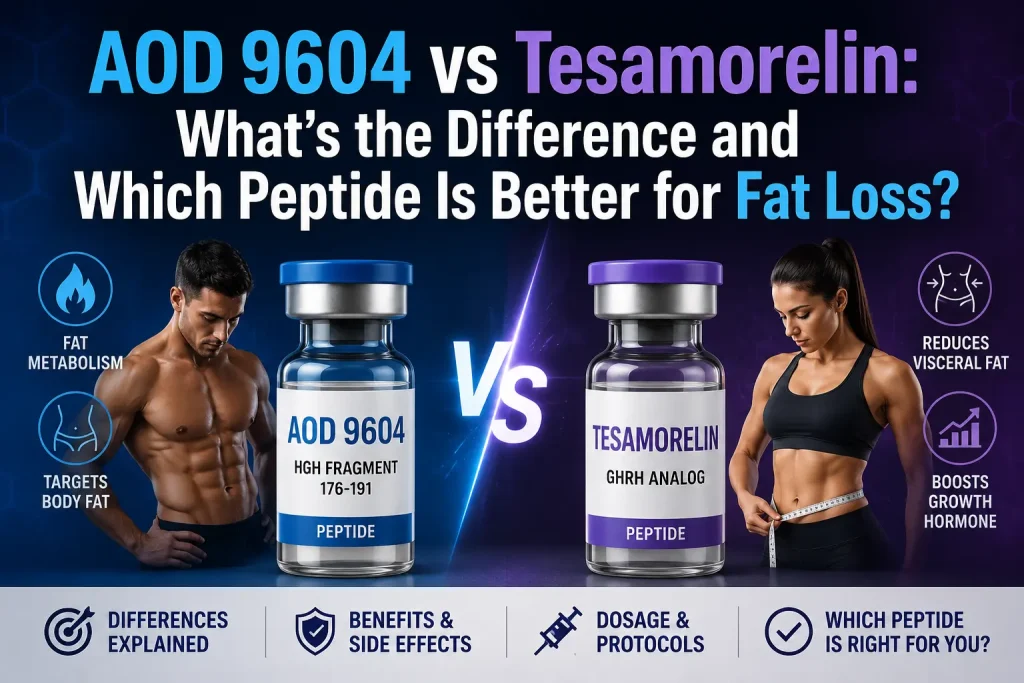
If you’re researching peptides for weight loss, you’ve probably come across AOD 9604 and Tesamorelin.
Both peptides are commonly discussed for their potential effects on fat loss and body composition, but they work in very different ways.
AOD 9604 was developed from a fragment of human growth hormone and is designed to target fat metabolism directly.
Tesamorelin, on the other hand, stimulates your body’s natural growth hormone production, which can influence body composition, recovery, and fat distribution.
Because they work through different mechanisms, many people wonder whether AOD 9604 or Tesamorelin is the better option for weight loss, stubborn belly fat, or visceral fat reduction.
The answer depends largely on your goals.
In this guide, we’ll compare AOD 9604 vs Tesamorelin, including how they work, their benefits, side effects, dosage considerations, and which may be better suited for specific fat-loss and body composition goals.
AOD 9604 vs Tesamorelin: Quick Comparison
| Feature | AOD 9604 | Tesamorelin |
|---|---|---|
| Peptide Type | HGH Fragment 176-191 | Growth Hormone-Releasing Hormone (GHRH) Analog |
| Primary Goal | Support fat metabolism | Stimulate natural growth hormone production |
| Growth Hormone Increase | Minimal | Yes |
| IGF-1 Increase | Minimal | Yes |
| Primary Fat Target | General body fat | Visceral abdominal fat |
| Focus Area | Fat loss support | Body composition and visceral fat reduction |
| Administration | Subcutaneous injection | Subcutaneous injection |
| Research Support | Limited | More extensive |
What Is AOD 9604?
AOD 9604 is a synthetic peptide derived from amino acids 176-191 of human growth hormone.
Researchers identified this portion of growth hormone because it appeared to play a role in fat metabolism without producing many of the broader hormonal effects associated with full HGH.
The peptide was originally developed as a potential obesity treatment and has been studied for its ability to support lipolysis, which is the breakdown of stored fat, while reducing lipogenesis, the formation of new fat cells.
One reason AOD 9604 gained popularity is that it does not appear to significantly increase growth hormone or IGF-1 levels.
Instead, it is primarily discussed as a peptide that targets fat metabolism.
Potential reasons individuals explore AOD 9604 include:
- Weight loss support
- Stubborn fat reduction
- Body recomposition goals
- Fat metabolism support
- Weight management programs
Because of its targeted mechanism, AOD 9604 is often considered by individuals who want to focus specifically on fat loss without substantially altering hormone levels.
What Is Tesamorelin?
Tesamorelin is a synthetic growth hormone-releasing hormone (GHRH) analog.
Rather than directly targeting fat cells, Tesamorelin works by signaling the pituitary gland to release more natural growth hormone.
This increase in growth hormone can then lead to higher IGF-1 levels and influence a variety of physiological processes.
Potential effects associated with Tesamorelin include:
- Improved body composition
- Growth hormone optimization
- Visceral fat reduction
- Support for lean muscle maintenance
- Enhanced recovery
Tesamorelin is especially well known for its association with reducing visceral fat, which is the deeper abdominal fat that surrounds internal organs.
Because it works through the body’s natural hormone pathways, Tesamorelin tends to have broader systemic effects than AOD 9604.
How Do AOD 9604 and Tesamorelin Work?
The biggest difference between Tesamorelin vs AOD9604 is how they produce their effects.
How AOD 9604 Works
AOD 9604 is designed to mimic the fat-burning portion of human growth hormone.
Researchers believe it may:
- Support fat breakdown
- Promote lipolysis
- Reduce fat storage
- Influence fat metabolism
Its primary activity occurs at the level of fat metabolism itself rather than through changes in growth hormone production.
This makes it a more targeted peptide compared to Tesamorelin.
How Tesamorelin Works
Tesamorelin works further upstream in the hormonal pathway.
Instead of directly affecting fat cells, it stimulates the release of growth hormone from the pituitary gland.
The increase in growth hormone may influence:
- Fat metabolism
- Recovery
- Protein synthesis
- Lean muscle preservation
- IGF-1 production
- Overall body composition
Because of these broader hormonal effects, Tesamorelin often impacts more than just fat loss.
AOD 9604 vs Tesamorelin for Weight Loss
One of the most common questions people ask is whether AOD 9604 or Tesamorelin is better for weight loss.
Both peptides may support body composition goals, but they approach the process differently.
AOD 9604 was specifically developed to target fat metabolism.
Many individuals choose it because it focuses on fat loss without significantly increasing growth hormone levels.
Tesamorelin takes a more indirect approach.
By increasing natural growth hormone production, it may help create conditions that support fat loss while also influencing muscle maintenance and recovery.
For someone whose primary goal is general fat-loss support, AOD 9604 may be appealing because of its targeted mechanism.
For someone interested in broader body composition improvements, Tesamorelin may offer additional benefits.
AOD 9604 vs Tesamorelin for Belly Fat
Not all belly fat is the same.
Understanding the difference between subcutaneous fat and visceral fat can help explain why these peptides are often discussed differently.
Subcutaneous Fat
Subcutaneous fat sits directly beneath the skin.
It’s the fat you can pinch around your waist, hips, and thighs.
While many people want to reduce subcutaneous fat for aesthetic reasons, it generally carries fewer health risks than visceral fat.
Visceral Fat
Visceral fat is located deeper in the abdomen and surrounds internal organs.
Excess visceral fat has been linked to:
- Insulin resistance
- Cardiovascular concerns
- Metabolic syndrome
- Chronic inflammation
Reducing visceral fat is often a major goal for individuals focused on long-term health and body composition.
Which Peptide Is Better for Belly Fat?
AOD 9604 is generally associated with overall fat metabolism and fat-loss support.
Tesamorelin, however, has been specifically studied for its effects on visceral abdominal fat.
As a result, Tesamorelin is often considered the stronger option for individuals whose primary concern is excess abdominal fat surrounding internal organs.
AOD 9604 vs Tesamorelin for Visceral Fat
When discussing visceral fat specifically, Tesamorelin tends to stand out.
Clinical studies have demonstrated reductions in visceral adipose tissue among certain patient populations using Tesamorelin.
This research has helped establish its reputation as one of the most recognized peptides for visceral fat reduction.
Visceral fat differs from ordinary body fat because it surrounds organs rather than sitting beneath the skin.
While AOD 9604 may support overall fat loss, current research does not specifically support it for visceral fat reduction to the same degree as Tesamorelin.
For individuals looking to target deeper abdominal fat, Tesamorelin is often viewed as the more evidence-supported option.
Research Comparing Tesamorelin vs AOD9604
Research support is another major difference between these peptides.
AOD 9604 Research
AOD 9604 was originally investigated as a potential obesity treatment.
Research suggested that it may support fat metabolism and fat loss while avoiding many of the hormonal effects associated with traditional growth hormone therapies.
Although some studies reported encouraging findings, overall results have been mixed, and research remains relatively limited.
Tesamorelin Research
Tesamorelin has been evaluated in numerous clinical studies involving visceral fat reduction and body composition.
- Reductions in visceral adipose tissue
- Increased growth hormone levels
- Increased IGF-1 levels
- Improvements in body composition markers
Because of its larger body of clinical evidence, Tesamorelin generally has stronger research support than AOD 9604.
Side Effects of AOD 9604 and Tesamorelin
Like all peptide therapies, both options may produce side effects.
Potential AOD 9604 Side Effects
Possible side effects may include:
- Injection site irritation
- Mild swelling
- Redness
- Headaches
- Nausea
Many individuals report that AOD 9604 is generally well tolerated.
Potential Tesamorelin Side Effects
Possible side effects may include:
- Injection site reactions
- Water retention
- Joint discomfort
- Muscle aches
- Swelling
- Increased IGF-1 levels
Because Tesamorelin influences hormone production, monitoring by a qualified healthcare provider is important.
AOD 9604 vs Tesamorelin Dosage
Dosage protocols vary depending on the provider, treatment goals, and individual needs.
Commonly discussed dosage ranges include:
| Peptide | Typical Dosage Range |
| AOD 9604 | 250-500 mcg daily |
| Tesamorelin | 2 mg daily |
Individuals should always follow the dosing instructions provided by their healthcare professional.
Can You Take AOD 9604 and Tesamorelin Together?
Some individuals wonder whether they need to choose between AOD 9604 and Tesamorelin or whether both can be used together.
Because the peptides work through different mechanisms, some providers may incorporate both into a comprehensive body composition program.
The potential rationale includes:
- AOD 9604 supports fat metabolism
- Tesamorelin increases growth hormone production
- The mechanisms may complement one another
Whether peptide stacking is appropriate depends on your health history, goals, and provider recommendations.
Is Tesamorelin or AOD 9604 Better?
There isn’t a universal winner in the AOD 9604 vs Tesamorelin debate.
The better option depends on what you’re trying to accomplish.
AOD 9604 May Be Better If You Want:
- General fat-loss support
- A peptide focused primarily on fat metabolism
- Body recomposition assistance
- Minimal impact on growth hormone levels
Tesamorelin May Be Better If You Want:
- Visceral fat reduction
- Growth hormone optimization
- Broader body composition improvements
- A peptide supported by more extensive clinical research
Ultimately, your health history, body composition, hormone levels, and goals should all factor into the decision.
Which Peptide Is Better for Weight Loss?
For many readers, this is the most important question.
If your primary goal is supporting fat metabolism and overall weight-loss efforts, AOD 9604 may be worth considering.
If your primary goal is reducing visceral fat while also optimizing growth hormone production and body composition, Tesamorelin may offer additional advantages.
Rather than asking which peptide is universally better, it’s often more helpful to ask which peptide is better for your specific goals.
How BHRT Delivered Can Help With AOD 9604 and Tesamorelin
Choosing between AOD 9604 and Tesamorelin isn’t always straightforward.
While both peptides are commonly discussed for fat loss and body composition support, the right choice depends on your individual health profile and objectives.
At BHRT Delivered, we provide personalized evaluations to help determine whether peptide therapy may be appropriate for your needs.
Our team reviews your symptoms, hormone levels, medical history, and goals to create a treatment plan tailored to you.
Whether you’re interested in reducing stubborn body fat, addressing visceral fat, or improving overall body composition, we can help you explore your options and determine the best path forward.
Final Thoughts on AOD 9604 vs Tesamorelin
When comparing these peptides, the biggest difference is how they work.
AOD 9604 focuses primarily on fat metabolism and is commonly discussed as a targeted fat-loss peptide.
Tesamorelin stimulates natural growth hormone production and has become particularly well known for its potential effects on visceral fat reduction and body composition.
Both peptides may have a role depending on your goals.
Individuals focused on general fat-loss support may prefer AOD 9604, while those interested in visceral fat reduction and growth hormone optimization may lean toward Tesamorelin.
The best way to determine which option may be right for you is to work with a qualified healthcare provider who can develop a personalized treatment plan based on your unique needs and health goals.
FAQs: AOD 9604 vs Tesamorelin
What is the difference between AOD-9604 and Tesamorelin?
The primary difference between AOD-9604 and Tesamorelin is how they work. AOD-9604 is a fragment of human growth hormone that is designed to support fat metabolism directly. Tesamorelin is a growth hormone-releasing hormone (GHRH) analog that stimulates the body to produce more natural growth hormone. Because of this, Tesamorelin tends to have broader effects on body composition, while AOD-9604 is often viewed as a more targeted fat-loss peptide.
Can you take Tesamorelin and AOD-9604 together?
Some healthcare providers may combine Tesamorelin and AOD-9604 because they work through different mechanisms. AOD-9604 primarily targets fat metabolism, while Tesamorelin increases natural growth hormone production. Whether combining these peptides is appropriate depends on your individual health profile and should be determined by a qualified healthcare provider.
How much weight can I lose with AOD-9604?
Weight-loss results with AOD-9604 vary significantly from person to person. Factors such as diet, exercise, metabolism, starting weight, and overall health can all influence outcomes. While some individuals report noticeable changes in body composition, there is no guaranteed amount of weight loss that can be expected from AOD-9604 alone.
How much AOD-9604 should I take daily?
Commonly discussed AOD-9604 dosages often range from 250 to 500 micrograms per day, although protocols can vary. The appropriate dosage depends on factors such as treatment goals, response to therapy, and provider recommendations. Always follow the guidance of a qualified healthcare professional when using peptide therapies.
What is best to stack with Tesamorelin?
The best peptide to stack with Tesamorelin depends on your goals. Some providers may combine Tesamorelin with peptides that support fat metabolism, recovery, muscle preservation, or body composition. Because peptide stacking can increase complexity and potential side effects, it should only be done under the supervision of an experienced healthcare provider.
How fast will I lose weight on Tesamorelin?
Weight-loss timelines with Tesamorelin vary from person to person. Some individuals may begin noticing body composition changes within several weeks, while more significant changes may take several months. Factors such as diet, exercise habits, sleep quality, hormone levels, and overall health can all affect how quickly results become noticeable.