If you’re trying to build lean muscle while dropping body fat, you’ve probably come across peptide stacks.
And for good reason, when used correctly, certain peptides can work together to support fat loss, muscle growth, and recovery at the same time.
But here’s what most people don’t realize: the “best” peptide stack depends on your goal, your body composition, and how your hormones are functioning.
There isn’t a one-size-fits-all answer.
This guide breaks down peptide therapy stacks clearly so you can understand what actually works, why it works, and how to choose the right approach for you.
SEE HOW PEPTIDE THERAPY CAN HELP YOU
What Is a Peptide Stack?
A peptide stack is simply using multiple peptides together to target different functions in the body at once.
Each peptide plays a role:
- Some increase natural growth hormone (GH) release
- Some improve fat metabolism
- Others support healing and recovery
When combined properly, they can help you:
- Build lean muscle more efficiently
- Burn fat more consistently
- Recover faster so you can train harder
Why Stacking Works Better Than Using a Single Peptide
Using one peptide can help, but stacking allows you to cover multiple pathways at the same time, which is where most of the results come from.
Think of it like this:
- Growth hormone support → helps build muscle and burn fat
- Recovery support → keeps you training consistently
- Metabolic support → helps your body actually use stored fat
When those work together, results tend to be more noticeable and more sustainable.
How Peptides Support Muscle Growth and Fat Loss
Most effective stacks work through three key mechanisms:
Growth Hormone and IGF-1 Support
Peptides like CJC-1295 and Ipamorelin signal your body to release more natural growth hormone, which supports:
- Lean muscle development
- Fat breakdown
- Improved sleep and recovery
Fat Metabolism
Certain peptides help your body tap into stored fat for energy, making fat loss more efficient, especially during a calorie deficit.
Recovery and Tissue Repair
Recovery peptides help reduce inflammation and speed up healing so your muscles can rebuild faster after training.
Best Peptide Stack for Muscle Growth and Fat Loss
Now let’s get into what you’re really here for, actual stacks you can understand and compare.
Best Overall Stack (Body Recomposition)
If your goal is to lose fat and build lean muscle at the same time, this is the most balanced option.
Stack example:
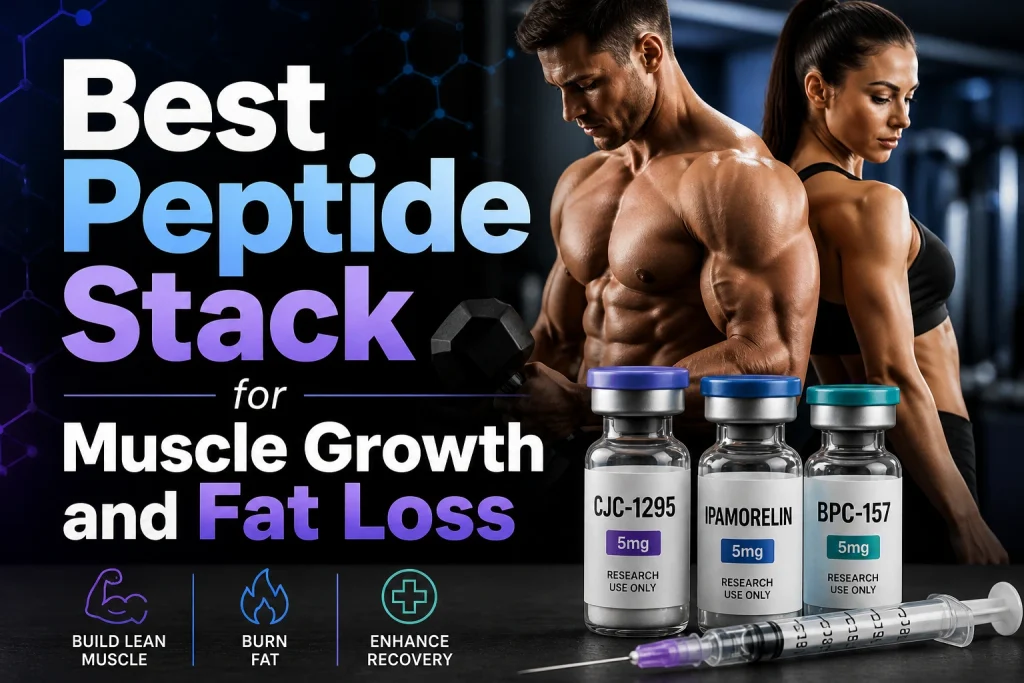
- CJC-1295
- Ipamorelin
- BPC-157
How it works together:
- CJC-1295 + Ipamorelin → increase natural growth hormone release
- BPC-157 → supports recovery, reduces inflammation, and improves healing
What to expect:
- Gradual fat loss
- Lean muscle development
- Better recovery between workouts
- Improved sleep quality
This is often the best starting point for people who want a clean, sustainable transformation.
Best Peptide Stack for Fat Loss (Cutting)
If your main goal is to drop body fat while maintaining muscle, this stack focuses more on metabolism.
Stack example:
- CJC-1295
- Ipamorelin
- Fat-loss–focused peptide (based on provider guidance)
How it works:
- Preserves muscle while dieting
- Encourages fat breakdown
- Supports metabolic efficiency
What to expect:
- Steady fat loss over time
- Improved muscle definition
- Less muscle loss compared to dieting alone
Best Peptide Stack for Muscle Growth (Bulking)
If you’re focused on building size, strength, and performance, this stack emphasizes growth and recovery.
Stack example:
- CJC-1295
- Ipamorelin
- BPC-157 or similar recovery support
How it works:
- Increases growth hormone output
- Supports protein synthesis
- Helps you recover faster from intense training
What to expect:
- Increased muscle mass
- Improved strength progression
- Reduced soreness and downtime
Best Stack for Recovery and Performance
If injuries, joint pain, or heavy training loads are limiting you, recovery becomes the priority.
Stack example:
- BPC-157
- Growth hormone–supporting peptide
How it works:
- Speeds up tissue repair
- Reduces inflammation
- Helps you train more consistently
What to expect:
- Faster recovery from workouts or injuries
- Less joint discomfort
- More consistent progress
How to Choose the Right Peptide Stack
The best stack for you depends on your current situation, not just your goal.
Check out our peptide comparison tool if you want compare specific peptides more in depth.
Your Primary Goal
- Fat loss → prioritize metabolism + GH support
- Muscle gain → prioritize GH + recovery
- Recomposition → use a balanced approach
Your Experience Level
- Beginners should keep stacks simple
- More advanced users may layer additional peptides
Your Body Fat Percentage
- Higher body fat → focus more on fat loss support
- Leaner individuals → shift toward muscle-building support
Age and Hormonal Changes
Growth hormone production declines with age, which is why GH-supporting peptides often become more noticeable over time.
How Long Do Peptide Stacks Take to Work?
Peptides aren’t instant, but they’re not slow either if used consistently.
A realistic timeline is:
- Weeks 1–2: Improved sleep and recovery
- Weeks 3–6: Subtle fat loss and performance improvements
- Weeks 6–12: Noticeable changes in muscle tone and body composition
Consistency with your protocol, training, and nutrition is what drives results.
Common Mistakes That Slow Results Down
A lot of people don’t get the results they expect, not because peptides don’t work, but because of how they use them.
Here are the most common issues:
- Using too many peptides at once
- Inconsistent dosing or timing
- Expecting fast, dramatic results
- Ignoring diet and training
Peptides support your progress, they don’t replace the basics.
Risks and Safety Considerations
Peptide stacking can be effective, but it should be approached carefully.
Important things to know:
- Not all peptides are approved for general use
- Incorrect dosing can impact hormone balance
- Stacking increases complexity and risk if not done properly
Possible side effects may include:
- Water retention
- Appetite changes
- Hormonal fluctuations
This is why having proper guidance matters.
SEE IF PEPTIDE THERAPY IS RIGHT FOR YOU
Final Thoughts: Best Peptide Stack for Muscle Growth and Fat Loss
The best peptide stack for muscle growth and fat loss isn’t about taking more, it’s about using the right combination for your goal and your body.
If you’re considering peptide therapy, working with a provider like BHRT Delivered can help you build a plan that’s tailored, structured, and aligned with your long-term health, not just short-term results.
FAQ: Best Peptide Stack for Muscle Growth and Fat Loss
What is the best peptide for burning fat and building muscle?
There isn’t a single peptide that does both perfectly on its own. Most people see better results using a combination of growth hormone–supporting peptides for muscle and additional support for fat metabolism, depending on their goals.
Does BPC-157 help burn fat?
BPC-157 is not primarily a fat-burning peptide. Its main role is supporting recovery, reducing inflammation, and helping with tissue repair. However, better recovery can indirectly support fat loss by allowing more consistent training.
Does BPC-157 build muscle?
BPC-157 doesn’t directly build muscle in the way growth hormone–supporting peptides do. Instead, it helps your body recover faster, which can support muscle growth over time by improving training consistency.
What is the best peptide stack to take?
The best peptide stack depends on your goal. A common approach includes growth hormone–supporting peptides paired with recovery support, and sometimes additional fat-loss support, depending on your needs.
How to lose 20 pounds of visceral fat?
Losing visceral fat takes time and consistency. The most effective approach includes a structured nutrition plan, regular strength and cardio training, good sleep, and, in some cases, medically guided therapies to support metabolism.