
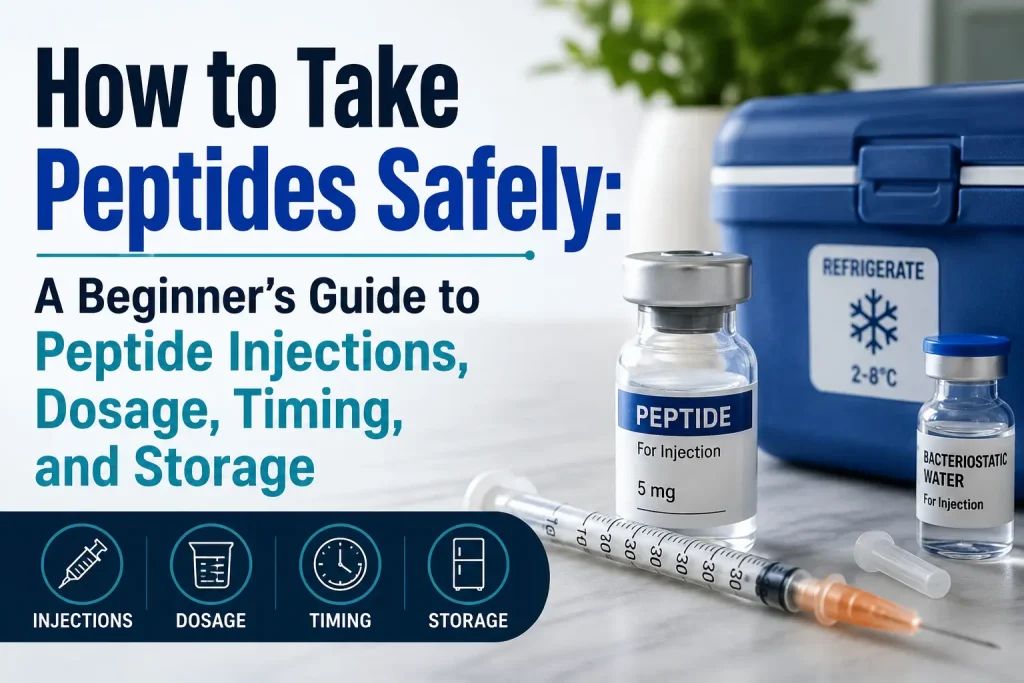
Peptide therapy has become increasingly popular for people looking to support weight management, muscle recovery, healthy aging, energy, sleep, and overall wellness.
But if you are new to peptides, it is completely normal to have questions about how to take peptides safely and correctly.
Some peptides are taken through injections while others come in oral, nasal, or topical forms.
Understanding how peptide therapy works can help you feel more comfortable and confident before starting treatment.
In this guide, we will explain how to use peptides, how peptide injections work, how to mix and store peptides properly, and common mistakes beginners should avoid.
What Are Peptides?
Peptides are short chains of amino acids that help send signals throughout the body.
Different peptides are designed to support different functions depending on the type being used.
Some peptides may support:
- Weight management
- Muscle recovery and performance
- Sleep quality
- Healthy aging
- Hormone optimization
- Metabolism and energy
- Wellness and recovery
Peptide therapy plans are typically personalized based on your health goals, symptoms, and medical history.
Different Ways Peptides Are Taken
Not all peptides are taken the same way.
The delivery method depends on the specific peptide and how it is absorbed by the body.
| Method | How It Is Taken | Common Uses |
|---|---|---|
| Subcutaneous injection | Injected into fatty tissue under the skin | Weight management and wellness peptides |
| Intramuscular injection | Injected deeper into muscle tissue | Performance and recovery peptides |
| Oral capsules | Taken by mouth | Select peptide therapies |
| Nasal spray | Absorbed through nasal tissue | Sleep and cognitive support peptides |
| Topical creams | Applied directly to the skin | Skin and cosmetic peptides |
Many peptides are administered through subcutaneous injections because this method often improves absorption and effectiveness.
Do Peptides Have to Be Injected?
No.
Some peptides are available in oral, topical, or nasal forms.
However, many peptide therapies are injectable because peptides can break down in the digestive system before the body absorbs them properly.
Injectable peptides are often used because they may provide more reliable absorption and consistent results.
How to Take Peptide Injections
If you are learning how to inject peptides for the first time, the process may feel intimidating initially.
The good news is that peptide injections are usually simple once you understand the basics.
Step 1: Wash Your Hands
Always begin by washing your hands thoroughly with soap and warm water.
This helps reduce contamination and supports safe injection practices.
Step 2: Gather Your Supplies
You may need:
- Peptide vial
- Syringe and needle
- Alcohol wipes
- Bacteriostatic water if reconstitution is needed
- Sharps disposal container
Always use sterile supplies and never reuse needles.
Step 3: Reconstitute the Peptide if Needed
Many peptides arrive in powder form and must be mixed before use.
To reconstitute peptides safely:
- Clean the tops of both vials with alcohol
- Draw bacteriostatic water into the syringe
- Slowly inject the water into the peptide vial
- Allow the liquid to run gently down the side of the vial
- Avoid shaking the vial aggressively
- Gently swirl until the powder dissolves
Many people search for how to mix peptides because incorrect reconstitution may affect peptide stability and dosage accuracy.
How to Draw the Correct Peptide Dosage
After mixing the peptide, use the syringe to draw the prescribed amount carefully.
If you are unsure how much to draw:
- Double-check the concentration
- Follow provider instructions carefully
- Avoid estimating measurements
Using the proper peptide dosage helps support consistency and safety during treatment.
Where to Inject Peptides
Most peptide injections are subcutaneous injections placed into fatty tissue under the skin.
Common peptide injection sites include:
- Abdomen
- Upper thigh
- Back of the upper arm
| Injection Site | Why It Is Commonly Used |
|---|---|
| Abdomen | Easy access and consistent fatty tissue |
| Upper thigh | Simple for self-injection |
| Upper arm | Common for subcutaneous injections |
Rotating injection sites may help reduce irritation, soreness, and skin sensitivity.
How to Inject Peptides Safely
Once you are ready to inject:
- Clean the skin with an alcohol wipe
- Pinch a small section of skin
- Insert the needle at a 45-90 degree angle
- Push the plunger slowly
- Remove the needle carefully
- Dispose of the needle safely in a sharps container
Most peptide injections use very small insulin-style needles and are generally well tolerated.
Are Peptide Injections Painful?
Most people describe peptide injections as:
- A quick pinch
- Mild pressure
- Brief discomfort
Using proper injection technique and rotating injection sites may help minimize discomfort.
Best Time to Take Peptides
The best time to take peptides depends on the peptide itself and your treatment goals.
| Goal | Common Timing |
|---|---|
| Sleep support | Evening or before bed |
| Workout recovery | Before or after exercise |
| Weight management | Consistent daily timing |
| Hormone support | Based on provider recommendations |
Some peptides may work best in a fasted state while others do not require meal timing.
Following a consistent schedule may help support better treatment consistency.
How Often Should You Take Peptides?
Peptide schedules vary depending on the type of peptide and your treatment plan.
Some peptides are:
- Taken daily
- Used weekly
- Cycled periodically
- Timed around workouts or sleep
There is no universal peptide schedule.
A provider will determine the best protocol based on your goals and overall health.
How to Store Peptides Properly
Proper peptide storage matters because temperature, sunlight, and handling can affect peptide stability.
Before Mixing
Peptide powders are often stored:
- In a cool, dry place
- Away from direct sunlight
- According to manufacturer instructions
After Reconstitution
Once peptides are mixed with bacteriostatic water, many require refrigeration.
| Storage Factor | General Recommendation |
|---|---|
| Temperature | Usually refrigerated after mixing |
| Sunlight | Keep away from direct light |
| Handling | Avoid excessive shaking |
| Needles | Use sterile needles every time |
Improper peptide storage may reduce effectiveness and stability.
How Long Do Peptides Last After Mixing?
The lifespan of peptides after reconstitution depends on:
- The specific peptide
- Storage conditions
- Whether refrigeration is used
- Manufacturer recommendations
Many peptides are commonly stored refrigerated after mixing and may remain stable for several weeks, but exact timelines vary.
Always follow provider and pharmacy guidance for storage and expiration.
Common Mistakes When Taking Peptides
Let’s look at some common mistakes people make when taking peptides:
Incorrect Reconstitution
Adding too much or too little bacteriostatic water can affect dosage accuracy.
Improper Storage
Leaving peptides unrefrigerated when refrigeration is required may reduce potency.
Reusing Needles
Always use a fresh sterile needle for every injection.
Skipping Instructions
Different peptides have different administration and timing requirements.
Injecting Into Irritated Skin
Avoid injecting into bruised, swollen, or sensitive areas.
Can You Travel With Peptides?
Many people travel safely with peptides, but proper storage is important.
When traveling:
- Use travel coolers if refrigeration is needed
- Keep medications properly labeled
- Follow airline regulations for syringes and medications
- Avoid exposing peptides to excessive heat
Peptide Side Effects and Safety
Side effects vary depending on the peptide and individual response.
Possible side effects may include:
- Redness at the injection site
- Mild swelling
- Temporary irritation
- Nausea
- Headaches
- Fatigue
Peptide therapy should always be supervised by a qualified medical provider who can help determine proper dosing, monitor progress, and adjust treatment when needed.
How BHRT Delivered Can Help With Peptide Therapy
BHRT Delivered provides personalized wellness solutions designed around your individual health goals.
Whether you are exploring peptide therapy for weight management, recovery, energy, healthy aging, or hormone support, professional guidance can help ensure safe administration and proper dosing throughout treatment.
If you are new to peptide injections or have questions about peptide therapy protocols, working with an experienced provider can make the process easier and more comfortable.
Final Thoughts: How to Take Peptides
Learning how to take peptides safely starts with understanding proper injection technique, storage, dosing, and timing.
While peptide therapy may seem overwhelming at first, many people become comfortable with the process quickly after learning the basics.
Working with a knowledgeable provider can help you avoid common mistakes and create a peptide therapy plan tailored to your wellness goals and overall health needs.
FAQs: How to Take Peptides
What is the best way to take peptides?
The best way to take peptides depends on the specific peptide and your treatment goals. Many peptides are taken through subcutaneous injections because this method may improve absorption and effectiveness. Some peptides are also available in oral, nasal, or topical forms. Following provider instructions carefully can help support safe and consistent use.
Where’s the best spot to inject peptides?
Common peptide injection sites include the abdomen, upper thigh, and back of the upper arm. Many people prefer the abdomen because it is easy to access and typically has consistent fatty tissue for subcutaneous injections.
What is the downside of taking peptides?
Potential downsides of peptide therapy may include injection site irritation, redness, swelling, headaches, nausea, or temporary discomfort. Some peptides may also require regular injections and consistent monitoring. Side effects and risks vary depending on the peptide being used.
Do you inject peptides into fat or muscle?
Many peptide injections are subcutaneous injections, which means they are injected into fatty tissue just beneath the skin. However, some peptides may be administered intramuscularly depending on the treatment protocol and provider instructions.