
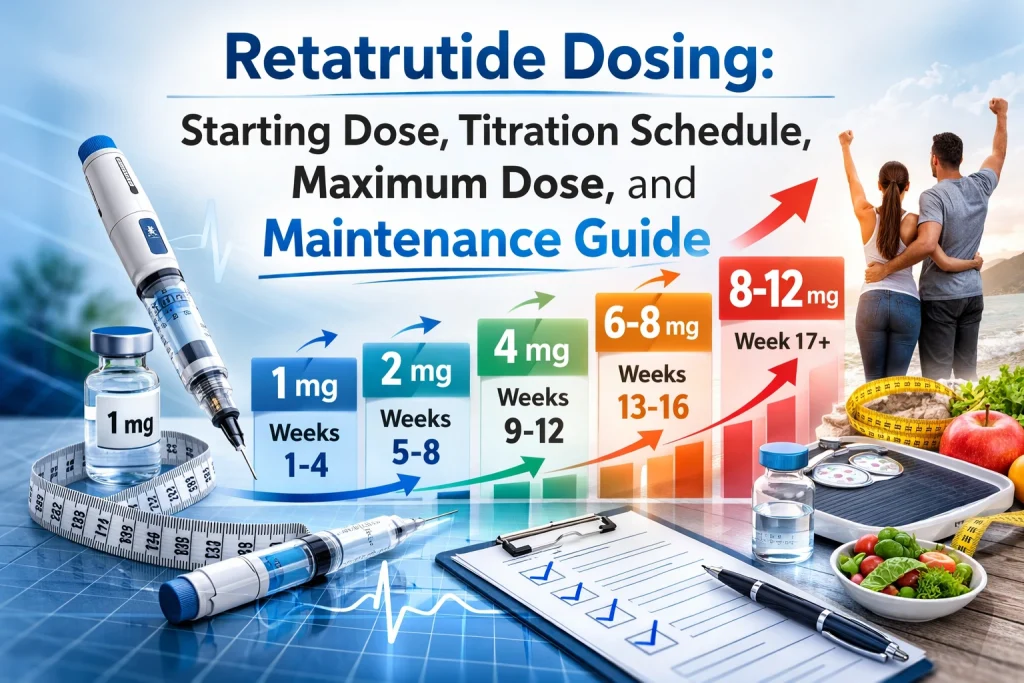
Retatrutide is administered as a once-weekly injection, with dosing gradually increased over time to allow your body to adapt safely while maximizing effectiveness.
Understanding proper retatrutide dosing is essential for achieving consistent weight loss, appetite control, and long-term metabolic improvements.
Retatrutide dosing typically starts at 1 mg once weekly and increases every four weeks until an effective target dose is reached.
Most individuals reach a dose between 4 mg and 12 mg weekly, depending on their response, goals, and tolerability.
This guide explains the retatrutide starting dose is calculated, dosing schedule, titration timeline, maximum dose, maintenance dose, and what to expect at each stage.
SEE HOW RETATRUTIDE CAN HELP YOU
Retatrutide Dosing Schedule Chart
The dosing schedule follows a gradual escalation pattern to improve tolerability and effectiveness.
| Week Range | Weekly Dose | Purpose |
| Weeks 1–4 | 1 mg | Starting dose for body adjustment |
| Weeks 5–8 | 2 mg | Early appetite suppression phase |
| Weeks 9–12 | 4 mg | Moderate therapeutic dose |
| Weeks 13–16 | 6–8 mg | Advanced fat loss and appetite control |
| Week 17+ | 8–12 mg | Target or maintenance dose |
Not everyone needs the highest dose.
Many individuals achieve excellent results at moderate doses such as 4 mg or 6 mg weekly.
Retatrutide Starting Dose
The standard retatrutide starting dose is 1 mg once weekly.
Starting at a low dose allows your body to adjust to the medication’s effects on appetite regulation, digestion, and metabolism.
This helps reduce the likelihood of adjustment symptoms such as:
- Nausea
- Digestive changes
- Mild fatigue
- Reduced appetite
Most individuals begin noticing appetite suppression within the first few weeks.
Retatrutide Titration Schedule: How Doses Increase
Retatrutide dosing increases gradually through a process called titration.
Dose increases typically occur every four weeks, but timing may vary based on individual response.
| Stage | Dose | Typical Duration | Expected Effects |
| Stage 1 | 1 mg | Weeks 1–4 | Initial appetite reduction |
| Stage 2 | 2 mg | Weeks 5–8 | Noticeable hunger control |
| Stage 3 | 4 mg | Weeks 9–12 | Consistent fat loss begins |
| Stage 4 | 6–8 mg | Weeks 13–16 | Strong appetite suppression |
| Stage 5 | 8–12 mg | Week 17 onward | Maximum appetite and metabolic effects |
How Retatrutide Dosing Works in the Body
Retatrutide dosing works progressively, meaning its effects increase as the dose increases.
Each dose level strengthens appetite regulation and metabolic activity.
At lower doses, retatrutide primarily reduces hunger signals.
As dosing increases, it enhances:
- Appetite suppression
- Fullness after meals
- Fat metabolism
- Insulin sensitivity
- Calorie intake reduction
This gradual escalation allows the body to adapt while improving fat loss efficiency.
What Is the Best Retatrutide Dose for Weight Loss?
The best retatrutide dose for weight loss varies between individuals.
Many people achieve significant weight loss at doses between 4 mg and 8 mg weekly.
Higher doses, such as 10 mg or 12 mg, may provide stronger appetite suppression, but they are not necessary for everyone.
The ideal dose is the lowest dose that provides:
- Consistent appetite control
- Steady weight loss
- Minimal side effects
- Sustainable long-term results
Your provider will adjust dosing based on your individual response.
Maximum Retatrutide Dose
The highest studied retatrutide dose is 12 mg once weekly.
This dose produces the strongest metabolic and appetite suppression effects.
However, reaching the maximum dose is not required for successful treatment.
Many individuals achieve excellent results at moderate doses, and increasing beyond an effective dose may not provide additional benefit.
Retatrutide Maintenance Dose After Weight Loss
Once weight loss goals are achieved, treatment may shift to a maintenance phase.
Maintenance dosing helps stabilize appetite and prevent weight regain.
Typical retatrutide maintenance dosing ranges include:
| Weight Loss Achieved | Typical Maintenance Dose |
| 10–15% body weight | 4 mg weekly |
| 15–20% body weight | 6 mg weekly |
| 20%+ body weight | 6–12 mg weekly |
Maintenance dosing is individualized and depends on:
- Appetite control
- Weight stability
- Metabolic response
- Long-term treatment goals
Some individuals maintain results at lower doses, while others require higher maintenance doses.
How Long Does It Take to Reach the Target Retatrutide Dose?
Most individuals reach their target dose within 16 to 20 weeks.
This gradual progression allows your body to adapt safely and comfortably.
Some individuals may reach their optimal dose sooner, while others may remain at lower doses longer depending on their response.
Dose increases can be slowed if needed.
How Long Does Each Retatrutide Dose Take to Work?
Each dose level produces gradual improvements in appetite and weight control.
Typical timeline:
- Weeks 1–4: Initial appetite reduction begins
- Weeks 5–8: Hunger decreases significantly
- Weeks 9–12: Noticeable weight loss begins
- Weeks 13–16: Strong appetite suppression develops
- Week 17+: Maximum therapeutic effects occur
Weight loss typically accelerates as dosing increases.
How to Determine the Right Retatrutide Dose
Retatrutide dosing is personalized based on individual needs.
Factors influencing dosing include:
Appetite response
If appetite improves significantly at lower doses, higher doses may not be necessary.
Side effect tolerance
Dose increases may be delayed to improve comfort.
Weight loss progress
Steady progress may allow continuation at the current dose.
Metabolic health
Metabolism and insulin sensitivity can affect dosing needs.
Individualized dosing helps maximize effectiveness and safety.
Retatrutide Weekly Dosing and Consistency
Retatrutide is taken once weekly.
Maintaining a consistent weekly schedule helps ensure stable appetite regulation and continuous metabolic support.
Consistency improves overall effectiveness and long-term results.
When Retatrutide Dose Increases May Be Delayed
Dose increases may be paused if adjustment symptoms occur.
This allows your body to adapt more gradually.
Common reasons to delay dose increases include:
- Temporary nausea
- Digestive discomfort
- Fatigue
- Adequate appetite control at current dose
Remaining at a lower dose longer often improves tolerability.
How Long Do People Stay on Retatrutide?
Treatment duration varies based on individual goals and response.
Some individuals continue treatment long term to help maintain appetite control and support metabolic health.
Your provider will determine the appropriate duration based on your progress.
SEE IF RETATRUTIDE IS RIGHT FOR YOU
Signs Your Retatrutide Dose Is Working
Common signs include:
- Reduced hunger
- Feeling full faster
- Smaller portion sizes
- Gradual weight loss
- Reduced food cravings
These improvements typically strengthen as dosing increases.
Summary: Retatrutide Dosing Overview
Retatrutide is taken once weekly with the typical starting dose is 1 mg weekly with doses increase gradually every four weeks
Gradual dose escalation allows retatrutide to work effectively while minimizing side effects.
BHRT Delivered provides personalized guidance to help determine the appropriate dosing schedule based on your goals, response, and overall health.
FAQs: Retatrutide Dosing
What are the doses for retatrutide?
Retatrutide dosing typically starts at 1 mg once weekly and gradually increases over time. Common dose levels include 1 mg, 2 mg, 4 mg, 6 mg, 8 mg, and up to 12 mg weekly. The dose is increased gradually to improve effectiveness while minimizing side effects. Many individuals achieve excellent results at doses between 4 mg and 8 mg weekly.
Do you have to inject retatrutide every day?
No, retatrutide is taken once weekly, not daily. Weekly dosing allows the medication to provide continuous appetite regulation and metabolic support without requiring daily injections.
How fast does retatrutide start working?
Many individuals begin noticing reduced appetite within the first 1 to 4 weeks. Studies how weight loss typically becomes more noticeable after several weeks, especially as the dose increases. Full therapeutic effects develop gradually over several months.
Can you build muscle while on retatrutide?
Yes, it is possible to maintain or build muscle while on retatrutide, especially when combined with resistance training and adequate protein intake. Preserving muscle mass is important during weight loss, and proper nutrition and exercise can support muscle health.
What to expect the first week on retatrutide?
During the first week, many individuals notice reduced appetite, smaller portion sizes, and increased fullness after meals. Some may experience mild digestive adjustment symptoms, which typically improve as the body adapts.
Is 0.5 mg of retatrutide enough?
Lower doses such as 0.5 mg may be used during initial adjustment phases depending on individual protocols. However, therapeutic effects are typically stronger at higher doses. The appropriate dose depends on individual response and treatment goals.
Which is better, retatrutide vs tirzepatide?
Both medications support weight loss and metabolic improvements, but they work slightly differently. Retatrutide activates additional metabolic pathways, which may produce stronger appetite and fat loss effects in some individuals. The best option depends on individual health factors and goals.
Does retatrutide just suppress appetite?
Retatrutide does more than suppress appetite. It also affects metabolic processes that support fat loss, improve insulin sensitivity, and enhance fullness after eating. Appetite reduction is one of its primary effects, but it also influences how the body uses and stores energy.