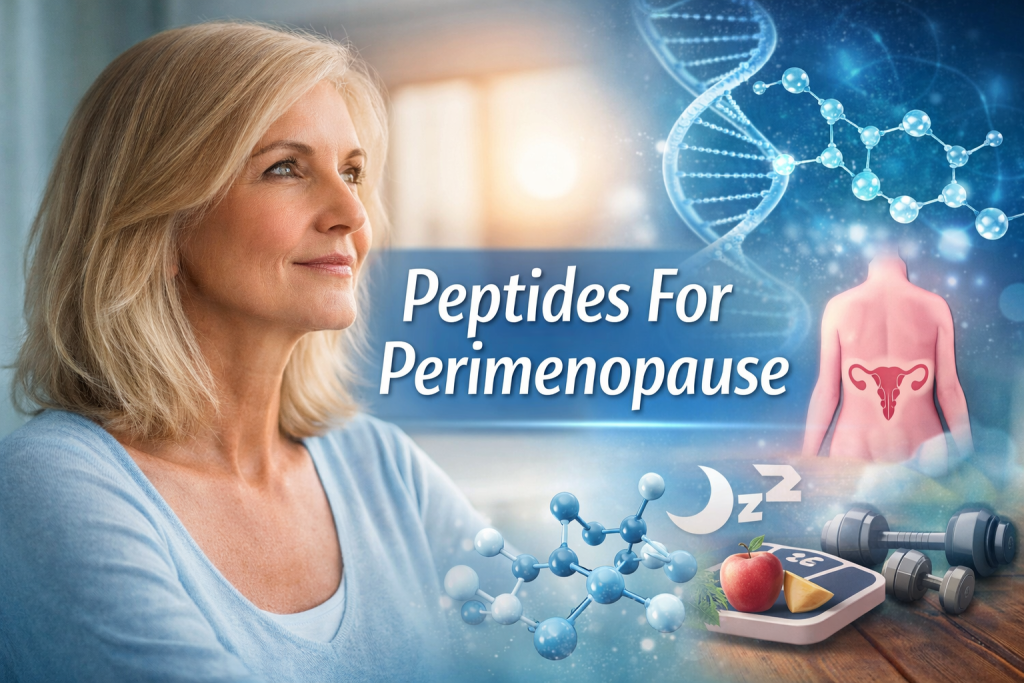
If you’re in your late 30s or 40s and starting to feel “off,” trouble sleeping, mood swings, brain fog, weight changes, or anxiety that seems to come out of nowhere, you may be entering perimenopause.
Perimenopause is the transitional phase before menopause, and it’s often when symptoms feel the most unpredictable.
Hormones don’t simply decline in a straight line.
Instead, they fluctuate, sometimes dramatically, which can make it harder to feel balanced from one month to the next.
As more women look for ways to support their health during this stage, peptides for perimenopause have gained attention as a possible option.
But what exactly are peptides, and how might they help during this hormonal transition?
GET HELP WITH YOUR PERIMENOPAUSE SYMPTOMS
Peptides for Perimenopause: A Quick Overview
Peptides are short chains of amino acids that act as signaling molecules in the body.
During perimenopause, peptide therapy may help support sleep, metabolism, mood, and recovery as hormones fluctuate, without directly replacing estrogen or progesterone.
What Is Perimenopause?
Perimenopause is the period of time when your body begins transitioning toward menopause.
It can last several years and usually starts in a woman’s late 30s or 40s.
During this stage:
- Estrogen and progesterone levels fluctuate rather than steadily decline
- Symptoms may appear inconsistently or change month to month
- Menstrual cycles often become irregular
- Stress tolerance, sleep quality, and energy levels may shift
Because hormones are changing unpredictably, perimenopause symptoms can feel different for every woman and even different from one cycle to the next.
What Are Peptides?
Peptides are short chains of amino acids that act as messengers in the body.
They help cells communicate and regulate processes such as metabolism, sleep, inflammation, tissue repair, and hormone signaling.
Your body naturally produces peptides, but production can decline with age, stress, and hormonal changes.
Peptide therapy involves using specific peptides to support targeted biological functions that may be affected during perimenopause.
How Peptide Therapy May Help with Perimenopause Symptoms
Peptides don’t replace hormones like estrogen or progesterone.
Instead, they support the systems influenced by hormonal fluctuations, which is why some women explore peptide therapy during perimenopause.
During this stage, peptides may help support:
- Sleep disruption and nighttime waking
- Brain fog and difficulty concentrating
- Fatigue and low motivation
- Changes in metabolism and body composition
- Increased stress sensitivity and mood swings
This supportive role makes peptides appealing for women who are experiencing symptoms but are not yet menopausal.
Can Peptides Help with Sleep, Energy, and Brain Fog During Perimenopause?
Sleep disturbances are one of the most common and frustrating symptoms of perimenopause.
Difficulty falling asleep, waking during the night, or feeling unrested in the morning can affect nearly every area of daily life.
Certain peptides are studied for their role in:
- Supporting deeper, more restorative sleep
- Improving overnight recovery
- Promoting daytime energy and mental clarity
As sleep improves, many women also notice secondary benefits such as better focus, improved mood, and increased motivation.
Peptides for Metabolism and Body Composition Changes
Weight gain or changes in body composition can occur during perimenopause, even when diet and exercise habits stay the same.
Hormonal fluctuations may affect how the body stores fat and maintains muscle.
Some peptides are associated with:
- Supporting fat metabolism
- Preserving lean muscle mass
- Improving recovery after physical activity
While peptides are not weight-loss medications, they may help support metabolic health when lifestyle changes alone don’t feel effective.
Peptides for Mood, Stress, and Emotional Balance
Hormonal shifts during perimenopause can influence how the nervous system responds to stress.
This may show up as anxiety, irritability, or emotional sensitivity.
Peptides involved in nervous system signaling and stress regulation may help support:
- A calmer stress response
- Emotional steadiness
- Improved resilience during hormonal fluctuations
This can be especially helpful for women who feel emotionally “on edge” without a clear trigger.
Common Peptides Discussed for Perimenopause Support
Peptide therapy is personalized, but certain peptides are more commonly discussed in relation to perimenopause symptoms.
CJC-1295 and Ipamorelin
CJC 1295 and Ipamorelin are often paired together, these peptides support natural growth hormone signaling.
They may help with sleep quality, energy levels, recovery, and changes in body composition.
BPC-157
BPC-157 is associated with tissue repair and inflammation support.
It’s sometimes used for joint discomfort, gut health concerns, and overall recovery, issues that may become more noticeable during perimenopause.
AOD-9604
This peptide has been studied for its role in fat metabolism and may be considered when weight gain becomes a concern despite consistent healthy habits.
Peptide selection depends on individual symptoms, goals, and overall health history.
Peptides and Hormonal Balance: How They Work Together
Perimenopause is often less about hormone deficiency and more about hormonal imbalance.
Estrogen and progesterone may still be present, but their fluctuations can affect how the body feels and functions.
Peptides may complement hormone-support strategies by:
- Supporting sleep and recovery during hormonal shifts
- Helping regulate stress and cortisol response
- Supporting metabolism and muscle health
- Improving overall resilience during the transition
They are often used as part of a broader, individualized approach rather than a standalone solution.
Are Peptides Safe to Use During Perimenopause?
Peptide therapy is not one-size-fits-all.
While many women tolerate peptides well, proper evaluation and guidance are important.
Peptides may be considered for women who:
- Are experiencing perimenopause symptoms but aren’t ready for full hormone replacement
- Want targeted support for sleep, energy, or metabolism
- Prefer a personalized, symptom-based approach
They may not be appropriate for everyone, which is why medical oversight and individualized planning matter.
Why Personalization Matters in Perimenopause Care
No two perimenopause experiences are exactly alike.
The most effective care considers:
- Symptom patterns
- Hormone levels
- Lifestyle and stress factors
- Sleep quality and energy levels
- Overall health goals
Personalization helps ensure that peptides, hormone support, or other strategies are used thoughtfully and adjusted as the body changes.
How BHRT Delivered Supports Women in Perimenopause
BHRT Delivered understands that perimenopause is a unique stage, not something to ignore or push through.
Care is designed to support women through hormonal transitions with clarity and guidance.
Women exploring peptides for perimenopause receive:
- Individualized evaluations
- Symptom-based treatment planning
- Guidance on whether peptides, hormone support, or a combination may be appropriate
- Ongoing support as symptoms and needs evolve
The focus is on helping women feel informed, supported, and balanced during this transition.
The Bottom Line: Peptides for Perimenopause
Perimenopause can feel unpredictable, but understanding what’s happening in your body can make a meaningful difference.
Peptides offer a potential way to support sleep, energy, metabolism, mood, and overall well-being during this stage, especially when used as part of a personalized plan.
If you’re navigating perimenopause and looking for options beyond simply waiting it out, peptide therapy may be worth exploring with proper guidance and support.
FAQs: Peptides for Perimenopause
Do peptides help with perimenopause?
Peptides may help support the body during perimenopause by improving sleep, energy, metabolism, mood, and recovery. Rather than replacing hormones, peptides work by supporting signaling pathways that can be affected as estrogen and progesterone fluctuate. Many women explore peptides to help manage symptoms while their hormones are still changing.
What peptides increase estrogen?
Peptides do not directly increase estrogen levels. Instead, they may support systems that are influenced by hormonal balance, such as sleep, stress response, metabolism, and tissue repair. During perimenopause, peptides are often used alongside other hormone-support strategies rather than as a way to raise estrogen itself.
How quickly do peptides work?
How quickly peptides work can vary from person to person. Some women notice improvements in sleep or energy within a few weeks, while other benefits may take longer to become noticeable. Results depend on the type of peptide used, individual symptoms, overall health, and consistency with treatment.
Do peptides mess with your period?
Peptides do not typically disrupt menstrual cycles because they do not directly control estrogen or progesterone production. However, as the body adjusts during perimenopause, cycle changes can occur naturally. This is why individualized guidance is important when exploring peptide therapy during this stage.
Does perimenopause cause bloating?
Yes, bloating is a common perimenopause symptom. Fluctuating estrogen and progesterone levels can affect fluid retention, digestion, and gut motility, which may lead to bloating or abdominal discomfort. Supporting hormone balance, stress management, and digestion can help reduce these symptoms over time.