If you’re comparing retatrutide vs tirzepatide, you’re likely trying to understand which option leads to better weight loss, how they work differently, and which one may be a better fit for your goals.
Both retatrutide and tirzepatide influence hormones that control appetite and metabolism, but they don’t work in exactly the same way.
Understanding those differences can help you decide what approach makes the most sense for you.
GET HELP WITH YOUR WEIGHT LOSS JOURNEY
Retatrutide vs Tirzepatide: Key Differences at a Glance
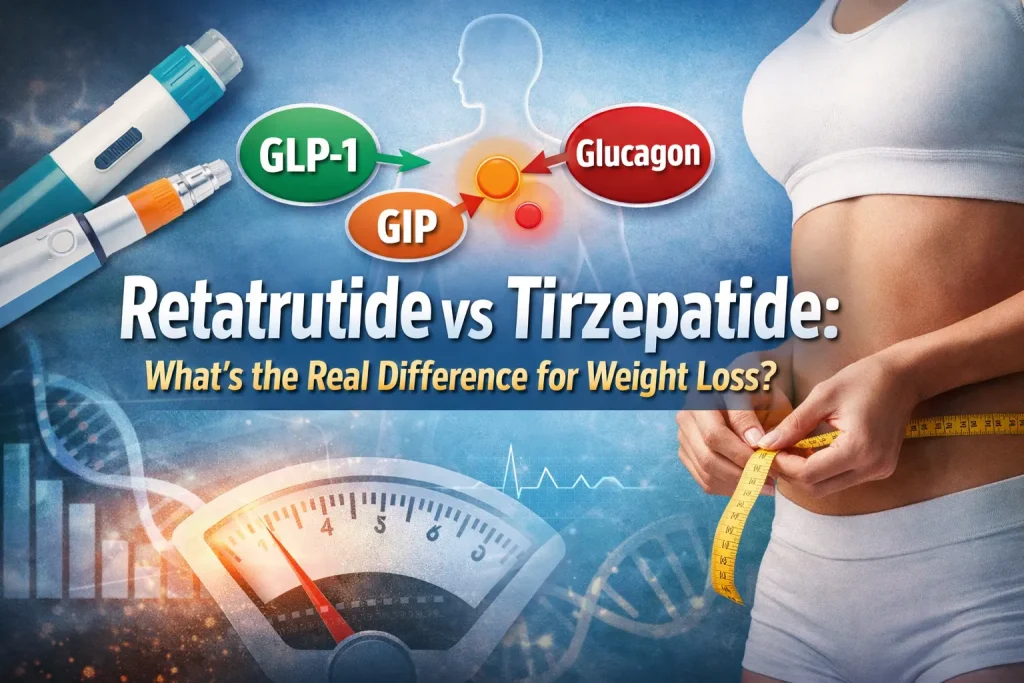
The main difference between tirzepatide vs retatrutide comes down to how many hormonal pathways each medication targets.
- Tirzepatide works on two key hormones involved in appetite and blood sugar regulation.
- Retatrutide works on those same two hormones plus an additional pathway linked to energy use and metabolism.
That extra mechanism is why retatrutide is often described as a more comprehensive metabolic approach.
How Does Tirzepatide Work?
Tirzepatide activates GLP-1 and GIP receptors, hormones your body naturally releases after eating. These hormones help regulate hunger, fullness, and insulin response.
In practical terms, tirzepatide may:
- Reduce appetite
- Increase feelings of fullness
- Slow digestion
- Help regulate blood sugar levels
Many people experience fewer cravings and a noticeable reduction in portion sizes over time, which can support steady weight loss.
How Does Retatrutide Work?
Retatrutide also activates GLP-1 and GIP receptors, but it adds a third pathway: glucagon.
The glucagon pathway plays a role in:
- Energy expenditure
- Fat metabolism
- How the body uses stored calories
By influencing both appetite and energy use, retatrutide is designed to impact weight loss from multiple angles rather than focusing only on hunger reduction.
Retatrutide vs Tirzepatide for Weight Loss
When comparing retatrutide vs tirzepatide for weight loss, the question isn’t just how much weight someone may lose, but how that weight loss happens.
Tirzepatide Weight Loss Results
People using tirzepatide often report:
- Gradual appetite suppression
- Predictable week-to-week progress
- Reduced cravings
- Weight loss that feels manageable and consistent
This steady approach appeals to those who prefer a controlled, structured experience.
Retatrutide Weight Loss Potential
Retatrutide’s broader hormonal activity may:
- Increase calorie burning in addition to reducing appetite
- Lead to faster changes in body composition
- Support greater overall weight loss in some individuals
Because it affects more metabolic pathways, the experience may feel more intense for certain people.
Which Leads to More Weight Loss: Tirzepatide or Retatrutide?
This is one of the most common questions people ask when comparing tirzepatide vs retatrutide.
Rather than thinking in terms of “better,” it’s more helpful to think in terms of response:
- Tirzepatide emphasizes appetite control and insulin regulation.
- Retatrutide adds a stronger metabolic component that may increase energy use.
Some people respond best to appetite-focused treatments, while others benefit from medications that also influence metabolism.
Retatrutide vs Tirzepatide Side Effects: What to Expect
Both medications may cause similar adjustment-related side effects, especially when starting or increasing doses.
Commonly reported effects include:
- Nausea
- Changes in appetite
- Bloating or fullness
- Fatigue during early stages
Because retatrutide affects more hormonal pathways, some individuals may notice stronger effects, both positive and uncomfortable, depending on personal tolerance.
Is Retatrutide Stronger Than Tirzepatide?
“Stronger” can mean different things.
- Retatrutide may have a broader metabolic impact.
- Tirzepatide tends to feel more predictable and controlled.
For some, a steadier approach feels more sustainable. For others, a more aggressive metabolic shift may align better with their goals.
Which Is Better: Retatrutide or Tirzepatide?
There isn’t a single right answer.
Tirzepatide may make sense if you:
- Want consistent appetite suppression
- Prefer gradual, predictable progress
- Value a structured dosing experience
Retatrutide may be appealing if you:
- Are interested in a more comprehensive metabolic approach
- Want to address both appetite and energy use
- Are closely monitoring how your body responds
The best option depends on your goals, health history, and how your body reacts to hormonal therapies.
SEE WHICH OPTION IS RIGHT FOR YOU
Why Individual Guidance Matters
Medications that influence appetite and metabolism can be highly effective, but they work best when used thoughtfully.
Factors like:
- Proper dosing
- Gradual adjustments
- Monitoring side effects
- Personalized treatment planning
all play a role in long-term success.
Bottom Line: Retatrutide vs Tirzepatide
When comparing retatrutide vs tirzepatide, the difference isn’t just about potential weight loss numbers.
It’s about how each medication supports weight management.
- Tirzepatide focuses on appetite control and insulin response.
- Retatrutide builds on that by also targeting energy expenditure.
Both represent advanced approaches to weight management.
Understanding their differences helps you choose a path that aligns with your body and your goals.
FAQs: Retatrutide vs Tirzepatide
Does retatrutide give you energy?
Some people in clinical trials have reported feeling more energetic, which may be related to retatrutide’s effect on glucagon and energy expenditure. However, experiences vary, and fatigue can also occur, especially during dose adjustments.
How fast do you lose weight on retatrutide?
Early studies suggest that weight loss with retatrutide can begin within the first few weeks, with more noticeable changes occurring over several months. Individual results depend on dose, adherence, and overall health.
Why is retatrutide better?
Retatrutide isn’t necessarily “better,” but it is different. It targets three hormone receptors instead of two, which may lead to greater weight loss in some people.
Can you ever come off of tirzepatide?
Yes, some people can come off tirzepatide, but weight regain is possible if lifestyle and metabolic factors aren’t addressed. Many individuals use it as a longer-term tool under medical guidance, with adjustments made over time.
What are the side effects of retatrutide?
Reported side effects in trials include nausea, vomiting, diarrhea, constipation, and reduced appetite. Because retatrutide activates an additional hormone pathway, gastrointestinal side effects may be more pronounced in some individuals.
How quickly does retatrutide start working?
Retatrutide may begin affecting appetite and metabolism within the first few weeks, but meaningful weight loss typically develops gradually as doses are increased over time.